
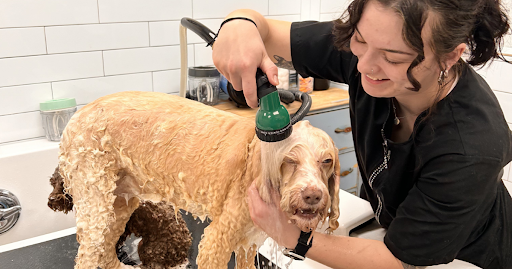
How often should a dog be groomed? Most dogs need regular brushing, nail checks, and occasional bathing, but professional grooming frequency depends on coat type, shedding, activity level, matting risk, and the haircut you want to maintain. Short-haired dogs may only need occasional professional bathing and de-shedding, while curly, long, or continuously growing coats often benefit from professional grooming about every 4–8 weeks.
For dog owners in Washington, St. George, and Southern Utah, the right routine is one that keeps your dog comfortable between visits, not simply one that follows a generic calendar.
At Bone Appetit Natural Pet Pantry, grooming begins with a consultation request so the team can learn about your dog’s coat, handling needs, and goals before recommending a service.
Quick guide: typical dog grooming schedules
| Coat or grooming need | At-home care | Typical professional-grooming starting point |
|---|---|---|
| Smooth, short coat | Brush about weekly; check nails regularly | Occasional bath, brush, nail trim, or de-shedding as needed |
| Short, dense or double coat | Brush weekly; increase during heavy shedding | Bath, brush, and de-shedding as needed—often seasonally |
| Medium or long coat | Brush several times per week; check for tangles | Often every 4–8 weeks, depending on coat condition and desired length |
| Curly, wavy, or continuously growing coat | Brush and comb frequently; daily for mat-prone areas | Often every 4–8 weeks to maintain a manageable coat and haircut |
| Senior, anxious, rescue, or puppy dog | Short, positive handling sessions at home | Ask for a consultation to create a comfort-focused plan |
These are practical starting points, not rigid rules. A groomer can recommend a more precise schedule based on your dog’s individual coat and condition.
Short, positive handling sessions at home
Ask for a consultation to create a comfort-focused plan
The American Kennel Club notes that grooming needs vary by breed and coat type; some dogs need brushing several times a week, while others need daily care or regular professional appointments. Bathing needs also vary. The ASPCA recommends regular brushing and says many dogs can be bathed at least every three months, with more frequent bathing appropriate for some dogs based on outdoor activity or skin needs.
What determines how often your dog needs grooming?
No two dogs have exactly the same grooming needs. The best schedule depends on several factors:
- Coat type and length: Long, curly, dense, double, or continuously growing coats usually require more maintenance than smooth, short coats.
- Matting and tangling: Dogs that develop knots behind the ears, under the collar, around the legs, or on the belly may need more frequent brushing and grooming.
- Shedding: Heavy shedders may benefit from more brushing and seasonal de-shedding support.
- Lifestyle: Hiking Southern Utah trails, swimming, rolling in red dirt, and active play can mean more frequent coat checks.
- At-home brushing: Consistent home care can help prevent minor tangles from becoming uncomfortable mats.
- Desired haircut: A shorter maintenance cut and a longer styled coat require different visit schedules.
- Comfort with handling: Puppies, senior dogs, rescue dogs, and dogs with grooming anxiety may need a more gradual, personalized approach.
How often should short-haired dogs be groomed?
Short-haired dogs still need grooming. While they may not need routine haircuts, they can benefit from brushing, bathing, nail trims, and de-shedding.
For many smooth, short-coated dogs, weekly brushing is a sensible starting point. The ASPCA specifically notes that smooth, short coats can generally be brushed once a week. Regular brushing helps remove loose hair and debris, distributes natural oils, and gives you a chance to notice changes in the skin or coat.
Consider a professional bath-and-brush, nail trim, or de-shedding service when shedding builds up, your dog has an odor after normal activity, or you need help keeping nails maintained.
How often should long-haired, curly, or doodle-type dogs be groomed?
Dogs with long, curly, wavy, or continuously growing coats often need more frequent professional grooming—commonly every 4–8 weeks—along with regular brushing and combing at home.
This is especially important for dogs whose coats can mat close to the skin. Mats can pull on the skin and become uncomfortable, so it is better to address tangles early than wait for a major coat reset.
Between appointments, focus on high-friction areas:
- Behind the ears
- Under collars and harnesses
- Armpits and chest
- Legs and paws
- Belly and sanitary areas
- Tail and rear furnishings
If a comb cannot move through the coat easily, contact a professional groomer for guidance. Avoid trying to cut out mats with scissors close to the skin.
How often should double-coated dogs be groomed?
Double-coated dogs, such as many retrievers, shepherds, huskies, and similar breeds, often need consistent brushing and additional support during heavier shedding periods.
A professional bath, brush, and de-shedding service may be helpful when loose undercoat is building up. Frequency varies by the individual dog, climate, shedding pattern, and the owner’s ability to brush at home.
If you are unsure whether your dog needs a routine bath and brush, a de-shed service, or a haircut, a consultation is the safest place to start. A groomer can help you choose a service that supports coat health and your dog’s comfort.
How often should a dog’s nails be trimmed?
Check your dog’s nails regularly. If you hear clicking on hard floors, see nails touching the ground, or notice snagging, it is time to arrange a trim.
The ASPCA advises that nails should be trimmed when they are close to touching the ground, while the AKC also identifies clicking on hard floors as a common sign that nails may be too long. Dogs wear their nails differently depending on activity, surfaces, and nail growth rate, so nail care is best based on observation rather than a fixed schedule.
Signs your dog may need grooming attention
Your dog does not need to look messy to benefit from grooming. Consider scheduling grooming support if you notice:
- Brushing takes longer or feels difficult
- The coat catches on a brush or comb
- Tangles are forming behind the ears, under the collar, or around the legs
- Loose hair is building up around your home
- Your dog has a strong odor after normal activity
- Nails are clicking on the floor
- Hair is growing around the eyes, paws, or sanitary areas
- Burrs, dirt, mud, or trail debris are collecting in the coat
- You are unsure how to care for your dog’s coat type
- Your dog is new to your household and has an unknown grooming history
If your dog seems painful, has an injury, experiences sudden skin changes, or appears unwell, contact a veterinarian. Grooming guidance is not a substitute for veterinary care.
What professional dog grooming can include
Professional grooming is not limited to haircuts. Depending on your dog and the service requested, an appointment may include:
- Full haircut
- Mini groom
- Bath and brush
- Nail trim
- De-shedding service
- Breed-specific styling
- Coat maintenance
Bone Appetit’s pet services page lists professional grooming at its Washington and Santa Clara locations. Because every dog’s needs are different, the Washington location uses a consultation-first process to help identify the most appropriate starting service.
How to maintain your dog’s coat at home
Professional grooming works best when it is paired with realistic home care. You do not need an elaborate routine; consistency matters most.
Start with the right brush or comb for your dog’s coat. Ask your groomer for tool recommendations during your consultation. Brush in short, positive sessions and pay special attention to areas most likely to tangle.
After hikes, lake days, muddy weather, or active play, take a moment to check for burrs, debris, and small tangles. Early attention is usually easier and more comfortable for your dog than waiting until the coat becomes difficult to manage.
If your dog dislikes brushing, keep sessions brief, reward calm behavior, and avoid forcing the process. A consultation can help you build a lower-stress routine.
What to tell your groomer at a consultation
You do not need technical grooming vocabulary. Useful information includes:
- What you like or dislike about your dog’s current coat
- Whether brushing is easy or difficult at home
- Your dog’s previous grooming experience
- Any handling sensitivities or preferences
- Whether you want a haircut, less shedding, a tidy-up, or easier maintenance
- Your preferred coat length or style
- How active your dog is each week
Bring photos if there is a style you like or a coat concern you want to discuss. Clear observations help the groomer recommend a practical next step.
Dog grooming in Washington and St. George, Utah
If you are looking for dog grooming in St. George, Utah, pet grooming in Washington, Utah, or help creating a manageable grooming routine, start with a consultation.
Bone Appetit Natural Pet Pantry’s Washington location is located at 160 E Telegraph St, Washington, UT 84780. Current services, hours, and availability can change, so confirm details when requesting your consultation.
Frequently asked questions
How often should a dog be groomed?
Most dogs need regular brushing, nail checks, and occasional baths. Professional grooming frequency depends on coat type, shedding, activity level, matting risk, and the haircut you want to maintain. Long, curly, and continuously growing coats commonly need professional grooming every 4–8 weeks.
Do short-haired dogs need professional grooming?
Yes. Short-haired dogs may benefit from bathing, brushing, nail trims, and de-shedding even if they do not need regular haircuts.
What is the difference between a bath and brush and a full groom?
A bath and brush generally focuses on cleaning and brushing the coat. A full groom may also include a haircut and more detailed coat maintenance. Ask your groomer which service best matches your dog’s coat and goals.
How do I know whether my dog is getting matted?
A mat is more than a loose tangle. If a brush or comb cannot move easily through an area of coat, contact a groomer for guidance. Common trouble spots include behind the ears, under the collar, armpits, legs, belly, and tail.
Does Bone Appetit Washington offer grooming?
Yes. Bone Appetit Natural Pet Pantry’s Washington location offers professional grooming. Start by requesting a grooming consultation so the team can learn about your dog and recommend an appropriate service.
Give your dog a grooming routine that fits
The best grooming schedule is one that fits your dog’s real coat needs and your household routine. Instead of waiting for the coat to become difficult to manage, pay attention to brushing, shedding, nails, tangles, and comfort.
For personalized guidance, request a grooming consultation with Bone Appetit Washington.
11:58 AM
Full access
Explore professional grooming services, request a grooming consultation, or read the American Kennel Club dog-grooming guide.